
Add Row
Add Element
cropper
update
AIbizz.ai
update
Add Element
  • Home
  • Categories
    • AI Trends
    • Technology Analysis
    • Business Impact
    • Innovation Strategies
    • Investment Insights
    • AI Marketing
    • AI Software
    • AI Reviews
June 26.2025
3 Minutes Read

How OpenAI’s New AI is Revolutionizing Gaming—and Business

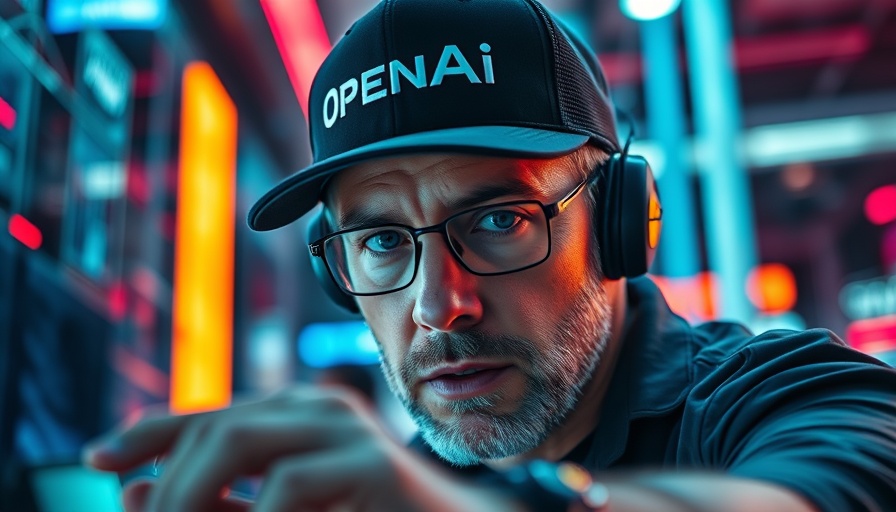
OpenAI AI gaming performance highlighted by focused man with OpenAI cap.

Exploring AI's Gaming Skills: New Benchmarks Beyond Traditional Testing

The realm of artificial intelligence (AI) is rapidly evolving, yet one intriguing area that has recently garnered attention is AI's capability within gaming environments. The video titled "OpenAI’s New AI: Crushing Games!" presents an eye-opening look at how various AIs stand up to the challenge of classic games like Tetris, Super Mario, and Sokoban. While traditional benchmarks often gauge performance through numbers on a screen, gaming offers a dynamic testing ground that truly evaluates decision-making, planning, and adaptability. This exploration uncovers the strengths and limitations of contemporary AI models, essential insights for business owners looking to leverage new technologies.

In 'OpenAI’s New AI: Crushing Games!', the discussion dives into AI's gaming capabilities, exploring key insights that sparked deeper analysis on our end.

Shifting Focus: Why Gaming Tests Are Crucial for AI

Games like Tetris and Super Mario provide a unique environment where AI can exhibit strategic thinking and real-time problem-solving. Throughout the testing outlined in the video, it's noted that AIs such as OpenAI’s o3-pro perform remarkably, showcasing skills not just in completing tasks but also in planning ahead, which reflects a significant leap in AI capabilities.

For business leaders, understanding how their AI technologies perform in less structured environments can better inform decisions regarding AI integration into their operations, particularly in industries demanding high adaptability and innovative strategies.

Lessons Learned from the AI Gaming Arena

The gaming experiments with AIs reveal three vital lessons for business owners interested in harnessing AI technologies:

  1. Emergence of Strategic Thinking: OpenAI's o3-pro demonstrated genuine planning skills, a breakthrough for AI. This indicates that businesses can anticipate more sophisticated AI applications that replicate human-like decision-making processes.
  2. Re-evaluating Existing Benchmarks: Traditional AI performance metrics might not capture real-world applicability. Gaming landscapes require long-term planning and offer richer evaluations of AI capabilities, allowing businesses to gauge how AI could navigate complex scenarios.
  3. Knowledge Transfer Across Tasks: As seen in the tests, AI performance improves in unrelated tasks after being trained in a specific game context. Companies can leverage this knowledge to enhance operational efficiencies by utilizing AI to derive insights applicable across various functions.

These insights are invaluable for entrepreneurs as they navigate the AI landscape, offering a blueprint for integrating AI into strategic initiatives effectively. The exploration of AI thinking in gaming serves as a precursor to its potential in real-world challenges.

The Exciting Future of AI and Gaming

The advancements demonstrated by models such as OpenAI’s o3-pro not only establish a new gold standard within AI gaming but also ignite curiosity about future trends. As AI improves its spatial reasoning skills through innovative training methods, various industries may adopt these technologies to better understand data patterns or customer behaviors.

For instance, those in marketing and sales might find AI tools that can strategically predict customer preferences, significantly impacting sales outcomes. The gaming milieu is paving the way for future applications that blend cognitive skills with business strategy.

How Business Owners Can Adapt to AI Trends

Adapting to the changing landscape means staying ahead of technological advances. Here are actionable insights for business leaders eager to capitalize on these AI developments:

  1. Invest in AI Training: As AI models evolve, investing in training programs for employees on AI functionalities will empower teams to leverage these tools effectively.
  2. Experiment with AI in Operations: Conduct experiments utilizing AI in smaller projects or pilot studies to understand practical applications without overwhelming existing systems.
  3. Monitor AI Developments: Keep abreast of emerging AI research, particularly around gaming applications, as they often foreshadow broader technological shifts.

By actively engaging with these insights, business owners can not only adapt but thrive in a tech-savvy environment.

As we look to the future, it’s clear that AI's integration into business practices is not just a possibility but an imminent necessity. With the leaps in capabilities demonstrated in gaming, the time to GET AI WORKING FOR YOU TODAY is now.

AI Trends

4 Views

0 Comments

Write A Comment

*
*
Related Posts All Posts
11.07.2025

Could OpenAI Be Too Big to Fail? Insights for Business Owners

Update OpenAI's Dominance: A Game Changer in AI Development With recent announcements of multi-billion dollar deals, the conversation around OpenAI's significance in the AI landscape has heated up. Their partnership with Amazon, worth $38 billion, marks a pivotal moment as OpenAI prepares to use Amazon's cutting-edge AWS infrastructure, which is crucial for enhancing its artificial intelligence capabilities. The ability to utilize hundreds of thousands of Nvidia GPUs reflects OpenAI's commitment to staying ahead of the curve in computational power.In 'Is OpenAI Too Big to Fail?', the discussion dives into the complexities surrounding OpenAI's rapid growth, prompting deeper analysis on the implications for business owners. Are We Witnessing an AI Bubble? The media is abuzz with discussions about whether OpenAI's rapid growth signifies an impending AI bubble. As OpenAI aligns with industry giants, many are questioning the sustainability of its massive $1.4 trillion in spending commitments. Critics like Ronda Santis have voiced skepticism, pointing out the financial implications of a company that is yet to turn a profit but has secured a web of partnerships that intertwine it with several major tech players. Understanding 'Too Big to Fail' The term 'too big to fail' evokes memories of the 2008 financial crisis. However, the context here is different. OpenAI's extensive connections do not necessarily equate to systemic risks but rather highlight our current landscape's dependency on AI advancements. Emerging voices suggest that OpenAI's real danger lies in potentially becoming over-reliant on these interconnections without ensuring financial sustainability. Looking Ahead: Future Predictions and Market Dynamics The future of OpenAI is fraught with both opportunities and challenges. With predictions estimating a revenue leap from $10 billion in 2024 to over $577 billion by 2029, often compared to tech giants like Google, there is considerable pressure to achieve those ambitious targets. Experts evaluate potential repercussions, suggesting that if the AI landscape becomes overly saturated, OpenAI's market share may dwindle, leading to significant financial repercussions. The Impact of OpenAI on Business Owners For business owners, OpenAI is not just a topic of speculative debate, but a beacon of transformative potential. As these advancements continue to unfold, understanding AI’s applications can drive competitiveness and innovation in their sectors. Companies that adapt quickly by integrating AI tools stand to benefit significantly, streamlining operations, enhancing customer engagement, and making data-driven decisions more effectively. Actionable Insights: Embracing AI Today As the dialogue surrounding AI evolves, the imperative for business owners to start integrating AI solutions into their operations has never been more pressing. The future promises greater efficiencies and capabilities that can revolutionize existing processes. Utilizing AI might initially seem daunting, but starting with small, manageable applications can lead to substantial benefits over time. Embracing AI now could pave the way for sustainable growth and increased competitive advantage. In summary, while discussions around OpenAI being 'too big to fail' continue to brew, the focus should also shift towards its practical implications for businesses. Now is the time for business owners to consider adopting AI technologies to not only stay relevant but thrive in this new era.

11.07.2025

Exploring How AI Disruption is Transforming Consulting for Business Owners

Update The Looming Influence of AI in Consulting As artificial intelligence (AI) continues to evolve, it casts a transformative shadow over various industries, and consulting is one of its most intriguing case studies. With businesses consistently seeking ways to optimize operations and enhance decision-making, AI's advancing capabilities offer significant opportunities, all while posing unique challenges that warrant careful consideration.In 'Why Consulting is a Perfect Case Study for AI Disruption,' the discussion dives into how AI is reshaping traditional consulting practices, prompting deeper analysis on its implications for business owners. Revolutionizing Decision-Making Processes Consulting firms thrive on data analysis and strategic insights, making them prime candidates for AI integration. AI tools can process vast amounts of data more efficiently than any human consultant, revealing trends and actionable insights at unprecedented speed. By leveraging predictive analytics, firms can identify potential market shifts before they occur, enabling clients to make informed decisions and maintain competitive advantages. Enhancing Client Engagement with AI Consultants are often tasked with fostering strong relationships and understanding client needs intimately. With AI-driven chatbots and communication tools, firms can maintain constant engagement. These systems can gather data about client inquiries, track sentiments, and provide timely responses, allowing consultants to focus on high-level strategic planning while AI handles routine engagements. The result? Improved client satisfaction and more robust partnerships. Risk Factors and Challenges of AI Adoption Despite the numerous benefits, AI integration also brings forth challenges that businesses must navigate. A primary concern is data privacy. With increased reliance on data-driven insights comes the responsibility of safeguarding sensitive client information. Furthermore, firms must confront the potential displacement of jobs caused by automation. Finding the right balance between utilizing AI to streamline processes without undermining workforce morale and employment will be crucial for sustainable growth. Future Predictions: A Collaborative Approach Looking ahead, the future of consulting will likely be defined by collaboration between human consultants and AI systems. Instead of viewing AI as competition, firms that embrace technology and incorporate it as a tool for enhancement may position themselves as industry leaders. The ability to blend human intuition with AI-driven data insights can create unique value propositions for clients, enhancing both service quality and operational efficiency. Decisions You Can Make With This Information For business owners, understanding the implications of AI in consulting is pivotal in today’s fast-paced landscape. Companies must consider how to adopt and implement AI tools that suit their specific needs. By doing so, they can improve workflows, enhance client satisfaction, and remain agile in a shifting market. Knowing when and how to leverage AI can ultimately lead to informed decisions that drive growth and innovation. How to Get Started with AI If you’re a business owner contemplating the integration of AI into your operations, the first step is to assess the specific challenges and objectives your firm faces. Research available tools and platforms tailored for the consulting industry, and consider engaging AI consultants who can guide you through personalized implementations. The right strategy can catalyze a seamless transition into the AI landscape, paving the way for enhanced productivity and performance. Conclusion: Embrace the Change—Start Using AI Now The conversation around AI and consulting is just beginning, but it’s crucial for business owners to engage. The future success of firms may hinge on their willingness to blend human expertise with advanced technology. By diving into AI today, you not only prepare yourself for the changes ahead but also seize the opportunity to lead in your industry.

11.06.2025

Gen Zero: The Future of Robotic Intelligence You Can't Ignore

Update Introducing Gen Zero: A Leap in Robotic Intelligence The unveiling of Gen Zero by Generalist AI represents a transformative moment in the field of robotics. This advanced robot learns through real-world interactions instead of relying on simulated experiences, leading to a staggering rate of learning—up to 500 times faster than human capabilities. With Gen Zero’s ability to process sensory data in real-time, it establishes a new frontier in robotic autonomy and skill acquisition.In GEN-0 Is The First Truly Intelligent Robot, we explore groundbreaking advancements in robotics, particularly focusing on Gen Zero's revolutionary capabilities. How Gen Zero Is Reshaping Robotics Gen Zero's novel design allows it to integrate sight, sound, touch, and motion seamlessly. This harmonic reasoning enables continuous learning without the delays typically associated with robotic programming. For business owners, this means that robots can potentially handle complex tasks across various sectors—manufacturing, logistics, and even service industries—becoming invaluable team members in operational workflows. A Revolution in Data-Driven Learning The extensive training Gen Zero has undergone—over 270,000 hours of real-world manipulation data—far surpasses traditional robots. This focus on quality and diversity of data ensures that the robot learns valuable skills applicable to numerous functions. As business leaders evaluate their operational processes, they should consider the potential benefits of integrating such autonomous systems into their frameworks, offering enhanced efficiency and reduced labor costs. Comparative Insights: Struggling Rivals While Gen Zero represents the pinnacle of robotic advancement, its contemporaries, like the Unitry G1 humanoid, have struggled with precision tasks. Viral moments of the G1's cooking fiascos highlight critical limitations in speed and fine motor control. Business owners must assess how the performance of varying robotic technologies can impact their industry, especially when choosing automation solutions that can scale effectively. Innovations Across the Globe Robotics innovation is not limited to humanoid machines. In China, for instance, companies like Dobot and Limax Dynamics are venturing into edutainment with AI-powered robot dinosaurs, blending learning with interactive entertainment. This diversification of robotics demonstrates the potential for emerging technologies to tap into different markets, a consideration businesses should keep in mind when exploring automation investment opportunities. AI in the Home: Security or Surveillance? The introduction of Neo, a household robot that allows remote human operators to assist in tasks, raises significant discussions around privacy. At $20,000 or $499 monthly, its value proposition must be critically examined by business owners, especially regarding ethical implications and consumer trust. As artificial intelligence becomes part of the domestic landscape, clear policies around data security will be paramount. Looking Forward: The Future of Robotics As we observe the evolution of robotics, the intersection of AI and physical robotics beckons intriguing possibilities. The ongoing experiments with embodied large language models may herald robots that not only perform tasks but also possess a form of cognitive awareness. Business owners should prepare for a future in which AI marketing software integrates with robotic technologies, enhancing strategies tailored to specific customer needs. While traditional robots operate within limitations, Gen Zero’s advancements present a compelling case for investment into AI-based robotics. With potential applications across both operational settings and consumer markets, the opportunity for innovation and efficiency can’t be overlooked. GET YOUR OWN AI ASSISTANT.

Terms of Service

Privacy Policy

Core Modal Title

Sorry, no results found

You Might Find These Articles Interesting

T
Please Check Your Email
We Will Be Following Up Shortly
*
*
*